Beautiful Leopard Spots Skin Patterns: A Versatile Resource for Designers, Educators, and Makers
Beautiful Leopard Spots Skin Patterns represent far more than a fleeting fashion motif—they are a foundational visual language rooted in biology, ecology, and cross-disciplinary design practice. This curated collection of seamless animal print patterns—spanning leopard spots, tiger stripes, zebra textures, giraffe skin, cowhide, snake scales, and hand-drawn abstract wildlife motifs—offers scalable, production-ready assets grounded in both natural fidelity and creative flexibility. Unlike generic stock graphics, these patterns are built with intention: each is mathematically seamless, resolution-independent, and delivered across multiple industry-standard formats (AI, EPS, SVG, PDF, JPEG) to support diverse technical workflows.
Why Seamless Animal Print Patterns Matter Beyond Aesthetics
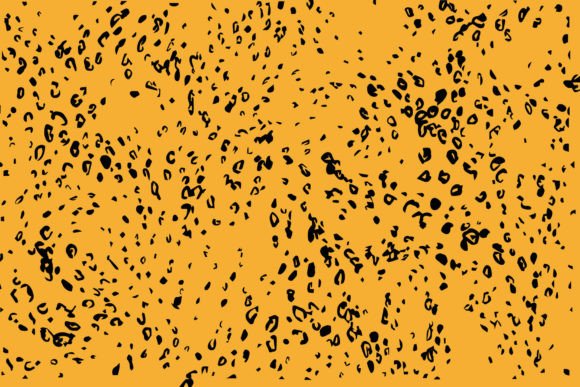
Seamless repetition is not merely a convenience—it’s a functional requirement. When applied to fabric printing, wall murals, or digital interfaces, non-seamless patterns produce visible seams, misaligned edges, or distorted scaling. Beautiful Leopard Spots Skin Patterns eliminate this risk by leveraging vector-based tiling logic and carefully balanced motif density. For example, the leopard spots pattern maintains biological plausibility—spot size, spacing, and clustering mimic real Panthera pardus pelage—while ensuring that no edge artifact disrupts continuity across meters of textile or pixels of screen space.
This attention to structural integrity extends across the full set: zebra stripe widths vary subtly to avoid optical vibration; giraffe reticulations preserve hexagonal cell integrity at any scale; tiger stripes follow directional flow lines that align naturally when tiled. These aren’t decorative fillers—they’re engineered surfaces, informed by observation of wildlife textures and refined through iterative digital testing.
Practical Applications Across Diverse Fields
The utility of this collection emerges most clearly when mapped to real-world use cases—not as isolated examples, but as integrated components within larger systems of creation and communication.
- Fabric & Product Design: Fashion designers use the leopard leather and tiger print background files to prototype textile repeats before committing to dye-sublimation runs. The SVG and AI formats allow precise color separation for screen printing on cotton, silk, or synthetic blends—critical for small-batch sustainable labels or limited-edition apparel lines.
- Educational Materials: Biology educators integrate the giraffe skin wallpaper and zebra texture into anatomy modules, comparing camouflage strategies across species. Because the patterns are vector-based, they can be zoomed to show micro-structure without pixelation—ideal for classroom projectors or interactive e-learning platforms.
- Publication & Packaging: Book cover designers layer the watercolor animal print pattern beneath typographic elements to add organic depth without overwhelming readability. The PDF version embeds fonts and preserves CMYK color profiles, ensuring consistency from screen to offset press.
- Digital Environments: UI/UX professionals apply the animal skin pattern as subtle desktop backgrounds or app loading screens—leveraging the JPEG variant for fast web delivery while retaining the SVG for high-DPI displays. The consistent 300 DPI resolution standardizes output across devices.
- Scrapbooking & Paper Crafts: Hobbyists combine the printable background files with physical media—printing the cow print and snake seamless patterns onto kraft paper or vellum, then cutting, embossing, or stitching them into tactile journals or greeting cards. The EPS format ensures crisp cuts when imported into Cricut or Silhouette software.
Technical Flexibility Meets Creative Control
Each file type serves a distinct role in the creative pipeline:
- Adobe Illustrator (.ai) retains editable layers, swatches, and global colors—enabling users to recolor entire leopard spots seamless pattern texture backgrounds with one click, or isolate individual spot clusters for custom illustration.
- Encapsulated PostScript (.eps) offers backward compatibility with legacy prepress systems, making it indispensable for commercial printers still operating on older RIP (Raster Image Processor) hardware.
- SVG (.svg) supports CSS animation, interactivity, and responsive scaling—allowing developers to create dynamic wildlife-themed dashboards where giraffe skin patterns shift opacity on hover or tiger stripes animate along a path.
- PDF (.pdf) functions as a universal proofing tool: embeds fonts, preserves transparency, and locks layout—ideal for client approvals or print vendor handoffs where version control matters.
- JPEG (.jpg) delivers fast-loading, universally supported raster output—perfect for social media banners, email headers, or blog post thumbnails where bandwidth and compatibility outweigh editability.
This multi-format strategy reflects an understanding that creators operate across ecosystems—not just software, but also constraints: time, budget, audience device capability, and production deadlines. A teacher preparing a last-minute classroom handout doesn’t need vector nodes; they need a clean, printable JPEG. A textile mill sourcing repeat patterns for jacquard looms requires precise EPS alignment. The collection accommodates both without compromise.
Design Integrity in Wildlife-Inspired Pattern Making
Authenticity distinguishes this set from superficial “jungle print” compilations. The hand-drawn wild animal spots abstract texture, for instance, avoids cartoonish exaggeration. Instead, it captures the irregularity of melanin distribution—spots taper at edges, overlap organically, and vary in opacity to suggest depth and light interaction. Similarly, the safari giraffe pattern references Giraffa camelopardalis reticulata’s sharp-edged polygons rather than generic blotches, supporting accurate representation in scientific illustration or conservation outreach.
This fidelity extends to material simulation. The leopard leather variant includes subtle grain overlays and micro-scratching cues—not photorealistic, but evocative—so that when used in 3D rendering software like Blender or Keyshot, it responds believably to lighting and displacement maps. Likewise, the watercolor animal print pattern uses soft-edged washes and pigment bleed, enabling designers to blend it with hand-lettered typography or botanical illustrations without visual dissonance.
Considerations for Ethical and Informed Use
While visually rich, these patterns carry contextual weight. Using tiger print background or leopard spots seamless pattern texture background in branding requires awareness of conservation status: both species are classified as endangered by the IUCN. Educators and communicators often pair the visuals with factual captions—e.g., embedding a QR code in a printed giraffe skin pattern that links to habitat preservation initiatives. Designers working with luxury clients may opt for the abstracted hand-drawn variants over photorealistic ones to emphasize artistic interpretation over literal representation—reducing potential associations with exploitative wildlife trade imagery.
Licensing clarity also matters. These files are intended for commercial and personal use, but not for resale as standalone pattern packs or NFT derivatives. Users integrating them into templates (e.g., Canva themes or Shopify themes) must ensure derivative works comply with attribution guidelines and do not falsely imply endorsement by conservation bodies.
Integration Into Broader Creative Workflows
Beautiful Leopard Spots Skin Patterns rarely exist in isolation. They function best as part of layered systems:
- A packaging designer might overlay a translucent zebra texture on a matte-finish box, then emboss a simplified tiger stripe motif in foil—using the SVG for vector accuracy and the JPEG for print mockup previews.
- An educator building a biodiversity unit could import the giraffe skin pattern into Google Slides as a slide master background, then annotate key anatomical features using the built-in drawing tools—knowing the underlying vector ensures crisp export to PDF handouts.
- A small-batch ceramicist scanning the cow print and snake seamless patterns into Procreate, then distorting them to wrap around mug silhouettes—leveraging the high-res JPEG for texture mapping and the AI file to extract clean outlines for laser-cut stencils.
In each case, the value lies not in the pattern alone, but in how seamlessly it interoperates with adjacent tools, materials, and goals. It bridges digital precision and analog tactility, scientific accuracy and expressive freedom, mass reproducibility and bespoke craftsmanship.
Looking Ahead: Pattern as Interface, Not Decoration
Emerging applications point toward deeper integration. Augmented reality apps now map giraffe skin patterns onto real-time video feeds to teach camouflage principles interactively. Generative design tools use the leopard spots seamless pattern texture background as seed data for algorithmic variations—producing new, biologically plausible coat patterns for speculative evolutionary models. Even accessibility-focused projects adapt the zebra texture’s high-contrast bands into tactile floor indicators for low-vision navigation.
Beautiful Leopard Spots Skin Patterns, then, are not static assets—but living reference points. They invite scrutiny, adaptation, and responsible reinterpretation. Whether used to explain melanin dispersion in a university lecture, line a boutique gift bag, or generate training data for ecological AI models, their strength resides in versatility grounded in verifiable natural structure—and in the thoughtful, adaptable hands that bring them into the world.