Year of Rabbit Christmas Patterns: A Practical Guide for Crafters and Designers
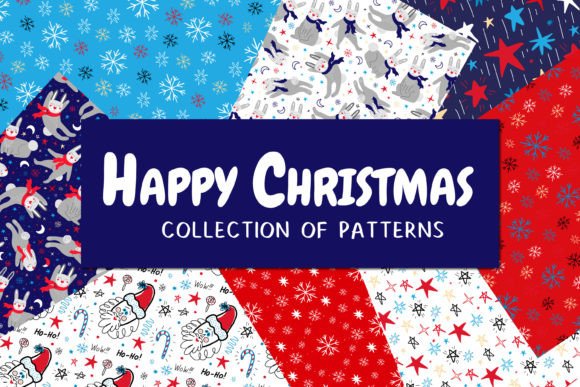
Year of Rabbit Christmas Patterns blend cultural symbolism with seasonal charm—featuring gentle rabbit motifs, wintry florals, delicate snowflakes, and festive accents rendered in soft palettes and balanced compositions. Unlike generic holiday graphics, these patterns carry subtle nods to the Lunar New Year’s Rabbit zodiac sign: think rounded ears, quiet postures, and motifs that evoke renewal and calm—qualities that distinguish them from bolder, more commercial Christmas designs. They’re not just decorative; they reflect a thoughtful fusion of tradition and contemporary craft sensibility.
What You Get—and Why Format Variety Matters
After downloading, you receive one ZIP file containing four complementary formats—each serving distinct production needs:
- EPS (v10): 21 files—including one master file with all patterns plus 20 individual pattern tiles. Compatible with Adobe Illustrator, CorelDRAW, Affinity Designer, Inkscape, and InDesign. Ideal for vector-based scaling, editing, and professional print workflows where precision matters.
- SVG: 20 files optimized for Cricut and Silhouette machines. Clean paths, no embedded raster elements—suited for precise cutting on vinyl, iron-on, or cardstock.
- PNG: 20 high-resolution (4000 × 4000 px, 300 DPI, RGB) files with transparent backgrounds. Useful for digital overlays, web graphics, planner stickers, or mockups where background flexibility is essential.
- JPG: 20 matching files at the same resolution—but on white backgrounds. Better for direct printing on paper, fabric, or promotional materials where transparency isn’t needed or supported.
This multi-format structure avoids the common limitation of single-format bundles. If you primarily cut vinyl, SVG saves time. If you design packaging or branding assets, EPS gives full editability. If you sell printable planners or digital stickers, PNGs deliver immediacy. Having all four means fewer workarounds—no converting files, no quality loss from resampling, and no format-related delays when moving between physical and digital outputs.
Where These Patterns Work Best—And Where They Might Not Fit
Year of Rabbit Christmas Patterns shine in contexts that value subtlety, cross-cultural resonance, and versatility across surfaces. For example:
- Physical goods: Their balanced scale and repeat-friendly construction translate well onto mugs (especially curved ceramic), tote bags (cotton canvas or linen), glassware (etched or printed), and T-shirts (screen-printed or DTG). The rabbit motifs avoid being overly literal—so they read as festive without leaning into kitsch, making them suitable for adult audiences who prefer understated holiday style.
- Planners and calendars: The 4000 × 4000 px PNGs allow crisp reproduction at small sizes—perfect for weekly spreads, divider pages, or cover accents. Because they’re designed as seamless repeats, they scale down without visible tiling artifacts, unlike some low-res clipart sets.
- Digital presence: Whether updating an Instagram grid, designing a seasonal website banner, or creating email newsletter headers, the transparent-background PNGs integrate cleanly over photos or gradients. The EPS files also support responsive SVG use on modern websites—though that requires basic front-end familiarity.
That said, these patterns aren’t optimized for every scenario. They lack photorealistic detail or maximalist textures—so they’re less suited for luxury packaging requiring metallic foil or embossing effects. They also don’t include editable text layers or layered PSD files, meaning custom typography or complex compositing would require additional design work. If your project demands animated versions (e.g., for social media stories), these static files won’t suffice without external tools.
How They Compare to Other Holiday Pattern Options
Many holiday pattern collections fall into two broad categories: mass-market seasonal graphics (often generic snowmen, trees, or ornaments) and culturally specific Lunar New Year sets (typically red-and-gold, dragon- or lion-focused). Year of Rabbit Christmas Patterns occupy a deliberate middle ground—neither purely Western nor strictly Eastern, but intentionally hybrid.
This positioning offers real advantages for creators targeting diverse or bilingual audiences. A café in Toronto or Sydney might use these patterns on holiday mugs without alienating customers who celebrate both Christmas and Lunar New Year. An indie stationery brand can launch a limited-edition planner that feels festive yet inclusive—avoiding the visual overload of traditional Christmas graphics while staying warmer and more accessible than minimalist monochrome alternatives.
Compared to AI-generated pattern packs, these are hand-crafted with consistent line weight, intentional spacing, and tested repeat logic—so tiles align predictably when tiled across large surfaces like fabric bolts or wall decals. Unlike free pattern libraries (which often restrict commercial use or embed watermarks), this set grants full commercial rights upon purchase—important if you’re selling finished goods or licensed digital products.
Practical Considerations Before You Choose
Before committing, consider three practical factors:
- Your workflow compatibility: Do you use vector editors regularly? If yes, EPS and SVG will integrate smoothly. If you rely mostly on Canva or PowerPoint, the JPG and PNG files are more immediately usable—but you’ll lose scalability and editability.
- Your output goals: Are you making one-off prints for personal use? Then JPGs may be sufficient. But if you plan batch production—say, 50 mugs or 200 planner covers—the EPS files let you adjust color palettes, resize without pixelation, or isolate elements for spot-color printing.
- Your audience’s expectations: If your buyers respond well to gentle, nature-inflected aesthetics—think cottagecore, slow living, or mindful gifting—these patterns align naturally. If your niche leans into retro, glam, or urban streetwear, you may need bolder contrast, tighter cropping, or higher saturation than this collection provides.
It’s also worth noting that while the set includes 20 unique patterns, it doesn’t offer alternate colorways (e.g., navy/gold or sage/cream variants). You’d need to recolor manually—something straightforward in Illustrator or Affinity, but potentially tedious in raster-only apps.
Making It Work Across Projects—Real Examples
A small-batch ceramicist used the EPS files to adapt a rabbit-and-holly pattern for mug wraps—resizing the repeat to match their kiln’s cylindrical dimensions and adjusting stroke weight for clarity at 8 cm height. A digital planner designer layered the transparent PNGs over handwritten journal pages, using blending modes to soften contrast without losing legibility. A boutique gift shop applied the SVGs to heat-transfer vinyl, then pressed them onto linen tea towels—achieving clean edges even on textured fabric.
None required advanced technical skills—just awareness of which format matched each step. That flexibility—across tools, scales, and mediums—is what makes Year of Rabbit Christmas Patterns function more like infrastructure than decoration.
Final Thoughts for Thoughtful Buyers
Year of Rabbit Christmas Patterns won’t replace highly specialized resources—like embroidery-specific DST files, Pantone-matched spot-color separations, or motion-ready Lottie assets. But for makers who regularly shift between physical product creation, print-on-demand services, and digital content development, they provide consistent, adaptable, and culturally grounded visuals without requiring constant format hunting or licensing negotiation.
If your work values cohesion across touchpoints—if you appreciate design that carries quiet intention rather than loud trend-chasing—this set supports that approach. And because it’s built for reuse, iteration, and quiet refinement, it tends to stay useful across multiple seasons—not just one December.