Seamless Patterns with Fruits: Versatile, Editable & Ready for Real-World Design
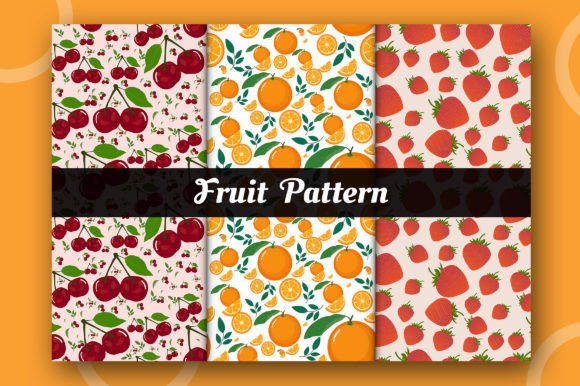
Imagine opening a folder and finding not just one—but dozens—of vibrant, perfectly repeating seamless patterns with fruits. Not pixelated JPEGs stuck at fixed sizes. Not watermarked or locked assets. Instead: crisp vector files in EPS format, fully editable in Adobe Illustrator CC, plus high-resolution JPGs for quick drag-and-drop use. These aren’t decorative afterthoughts—they’re production-ready design foundations built to move seamlessly from sketchpad to store shelf.
Why Seamless Patterns with Fruits Stand Out in Today’s Creative Workflow
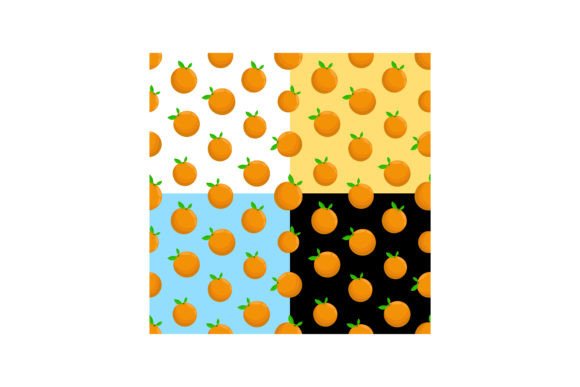
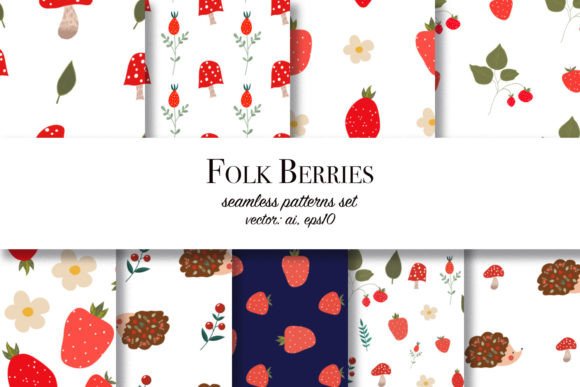
Fruit motifs carry instant warmth, energy, and approachability. Think ripe strawberries bursting with red, citrus slices radiating zest, tropical mangoes layered in golden gradients, or minimalist pear silhouettes arranged with quiet rhythm. But what transforms them from charming illustrations into indispensable tools is their seamless nature—no visible edges, no awkward repeats, no stitching required. The pattern flows infinitely in all directions, making it ideal for surfaces of any scale: a tiny mobile cover or a 10-foot wall mural.
Unlike raster-based repeats that blur or pixelate when enlarged, these are vector-based seamless patterns with fruits. That means you can zoom in 500%, recolor individual elements, adjust spacing, or isolate a single fig or pineapple to repurpose as a standalone icon—all without quality loss. Designers working across apparel, packaging, and digital interfaces rely on this flexibility daily. A textile studio might scale the same lemon-and-lime repeat to fit a full-width fabric bolt, then shrink it precisely for a matching tote bag strap. A stationery brand could lift the grape cluster motif and drop it directly into a wedding invitation layout—then tweak saturation to match the couple’s color palette.
Where Seamless Patterns with Fruits Truly Shine (Beyond the Obvious)
Yes, they work beautifully on t-shirts, pajamas, and plazos—but their utility goes much deeper. Consider:
- Interior spaces: Use a subtle watercolor-style peach pattern as a sofa cover texture, then echo it in pillow designs and curtain borders for cohesive, layered styling—without needing custom printing runs.
- Product packaging: Apply a tight, clean pineapple repeat to a juice box label or artisanal jam jar. The vector clarity ensures sharp lines at small print sizes, while the fruit theme instantly signals freshness and natural ingredients.
- Digital interfaces: Drop a soft, low-contrast berry pattern as a website background or mobile cover design. Because it’s seamless and scalable, it adapts flawlessly to portrait and landscape orientations—and won’t distort on high-DPI screens.
- Home goods & décor: Translate the same vector file to carpet design, tile layouts, or even laser-cut wood panels for kitchen backsplashes. The EPS format retains paths and anchors, letting CNC software read curves and corners accurately.
Even unexpected applications thrive here. A footwear brand used a stylized kiwi-and-kumquat repeat to line the interior of limited-edition sneakers—scaled down just enough to feel luxe, not busy. A boutique bakery printed the same pattern on card making stock for gift tags and cupcake wrappers, creating instant brand recognition across touchpoints.
Editing Made Effortless—No Illustrator Expertise Required
“Easy to edit” isn’t marketing fluff—it’s baked into how these seamless patterns with fruits are structured. Each EPS file is organized with named layers: Fruit Elements, Background Shape, Repeat Grid. Want to swap oranges for blood oranges? Select the orange layer, hit “Recolor Artwork,” and shift hues in seconds. Need more breathing room between motifs? Adjust the artboard size and re-apply the pattern swatch—Illustrator recalculates the tile automatically.
The included high-resolution JPGs serve a different purpose: speed. When mocking up a hoodie cover book in Photoshop or building a Shopify product page, you don’t need vectors—you need pixel-perfect, ready-to-place textures. These JPGs render cleanly at 300 DPI, so whether you’re designing a mouse pad for a café or a ladies bag print for Etsy, your preview matches final output.
Practical Tips Before You Download or License
Not all fruit patterns are created equal—here’s what smart designers check first:
- Tile size matters: Smaller repeats (under 6 inches square) suit fine fabrics like silk scarves or delicate pillow design details. Larger tiles (12+ inches) hold impact on wall art or sofa covers, where close viewing is less common.
- Color mode readiness: These files ship in CMYK and RGB variants. If you’re designing for packaging or printed invitations, start with CMYK to avoid unexpected hue shifts during press runs.
- Pattern density: A tightly packed fig-and-fig leaf repeat reads as rich and textural on apparel; a sparse arrangement of single pomegranates works better for mobile cover backgrounds where interface elements need visual room.
- Licensing scope: Confirm usage rights cover your intended application—especially for commercial products like shoes, belt hardware, or tote bags sold at retail. Reputable collections explicitly permit unlimited end-product runs.
Also worth noting: because these are vector-based seamless patterns with fruits, they integrate smoothly with modern design systems. Plug them into Figma via SVG export for UI kits. Import into Procreate for hand-lettered greeting card overlays. Even convert to CSS background patterns for responsive websites—no slicing, no tiling gaps.
From Concept to Creation—How Designers Actually Use These Files
Meet Lena, a freelance surface pattern designer who licenses her work to global textile mills. She starts every client pitch with three variations of the same seamless patterns with fruits: one bold and saturated for summer apparel, one muted and tonal for premium home linens, and one monochrome version optimized for embroidery digitizing. All derived from the same base EPS—just adjusted stroke weights, opacity, and contrast.
Or consider Diego, who runs a small-batch ceramics studio. He uses the vector fruit patterns to create custom decals for mugs and plates—scaling the repeat to match each item’s curvature, then exporting to his vinyl cutter. The precision of the vector paths means no fuzzy edges on fired glaze transfers.
And then there’s Maya, a graphic designer building a wellness brand identity. She embedded a gentle blueberry-and-mint pattern into the background of the client’s website hero section, then pulled out a single berry to become the favicon and app icon. Consistency, achieved—not through separate illustrations, but through intelligent reuse of one seamless system.
That’s the real power of these resources: they don’t replace creativity—they accelerate it. They let you spend less time wrestling with alignment and more time refining mood, message, and market fit.
Final Thought: Fruit Patterns That Grow With Your Projects
Fruit has always symbolized abundance, vitality, and natural harmony. When captured in truly seamless, vector-based form, that symbolism becomes functional. Whether you’re printing on wood, embroidering onto hoodies, etching onto glass, or animating for an app interface, these seamless patterns with fruits adapt—not as static images, but as living, editable assets. They’re not just about what something looks like. They’re about how easily it moves, scales, transforms, and belongs—across materials, markets, and moments.