Monstera Patterns for Creative Projects
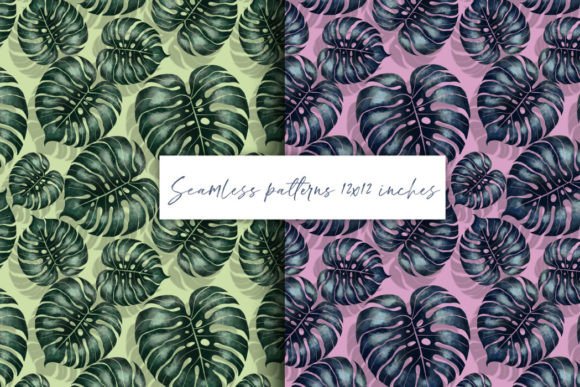
Monstera Patterns bring the bold, organic energy of tropical foliage into your creative workflow—without the upkeep of a real plant. These aren’t generic clipart repeats or low-res downloads. They’re two meticulously crafted, high-resolution JPG files (3600×3600 pixels, 300 dpi), designed to scale cleanly across physical and digital applications—from delicate greeting cards to large-format wall art.
What sets these patterns apart is their authenticity. Created by Gribanessa, they’re hand-drawn first—then refined digitally—so every leaf vein, split, and curve feels intentional and alive. The green palette isn’t flat or synthetic; it’s layered with subtle tonal variation that mimics natural light and shadow. That nuance matters when you’re printing on textured paper, dyeing fabric, or layering over photography in marketing assets.
Why Resolution and Seamlessness Matter More Than You Think
A 3600×3600px canvas at 300 dpi isn’t just “high-res”—it’s production-ready. At that size, you can crop tightly for a single monstera leaf motif on a business card, or tile seamlessly across a 48″-wide wallpaper panel without pixelation or visible repeat breaks. The seamless tiling is especially critical for fabric design and wrapping paper: no awkward misalignments at the edges, no wasted space trying to hide seams.
Unlike many free pattern packs that compress detail to reduce file size, these retain crisp linework and soft gradients even when zoomed in. That fidelity translates directly to output quality—whether you’re laser-cutting vinyl decals, screen-printing tote bags, or exporting PNG overlays for Canva social templates.
Real Uses Across Real Roles
Crafters & DIYers: Use one pattern as a full-sheet background for scrapbook layouts, then isolate individual leaves to cut with a Cricut for dimensional card accents. The resolution holds up beautifully under glue, embossing, or watercolor washes.
Small Business Owners: Print Monstera Patterns on kraft paper for eco-friendly gift wrap—or license them (check usage terms) for branded product packaging. A café might use the subtler tone-on-tone version for coffee sleeve designs; a boutique could pair it with minimalist typography for hang tags.
Educators & Camp Coordinators: Print tiled sections onto cardstock for classroom bulletin boards or summer camp activity stations. The botanical theme supports science units on plant anatomy or biomes—and the clean lines make it easy for kids to trace or color without visual clutter.
Freelance Designers & Marketers: Drop the pattern into mockups for client presentations—think Instagram story backgrounds, email header banners, or printable workshop handouts. Because it’s seamless and neutral enough in tone, it frames content without competing. Pair it with warm neutrals or muted corals for a cohesive summer campaign look.
Publishers & Zine Makers: Use the pattern as a textured page border or section divider. Its organic rhythm adds visual breathing room between dense text blocks—more engaging than a solid color, less distracting than photographic imagery.
What You Get—and What You Don’t
You receive two distinct Monstera Patterns: one likely emphasizing dense, overlapping foliage for impact; the other possibly more open and airy for subtlety. Both are delivered as JPGs—unlocked, no watermarks, no layers. That means immediate drag-and-drop usability in virtually any software: Adobe Photoshop, Affinity Designer, Procreate, Silhouette Studio, or even Google Slides.
Importantly, mockups are not included. That’s intentional. It keeps the file lightweight and gives you full control over how context is added—whether you drop the pattern into your own product mockup library, use Smart Objects in Photoshop, or render previews via Placeit or Artboard Studio. You’re not locked into someone else’s aesthetic framing.
Practical Tips Before You Start
- Test print first: Even at 300 dpi, paper stock affects contrast and saturation. Run a small test on your intended material—especially if using matte or recycled paper.
- Check color mode: JPGs are RGB by default. If you’re sending to a commercial printer for large runs, convert to CMYK *after* adjusting levels—some greens shift slightly in conversion.
- Scale with intention: Zooming out too far on a seamless pattern can exaggerate the repeat. For wall murals, tile at 75–90% scale to preserve the illusion of randomness.
- Layer thoughtfully: Try overlaying the pattern at 10–20% opacity behind text for texture without sacrificing legibility. Or invert it in Photoshop to create a negative-space stencil effect.
Beyond Decoration: How Monstera Patterns Support Brand Voice
Tropical motifs often lean casual—but Monstera Patterns avoid cliché. There’s structure in the symmetry of the leaves, elegance in the spacing, and restraint in the color range. That makes them surprisingly versatile for brands wanting to signal freshness, growth, or grounded creativity—not just “vacation vibes.”
A sustainable skincare line might use the pattern on ingredient labels to reinforce natural sourcing. A yoga studio could integrate it into class schedule posters to evoke calm vitality. The key is alignment: let the pattern support your message, not define it.
And because these are digital papers—not licensed stock photos—you retain full editing rights within standard commercial use. Flip, recolor, mask, or combine with other elements without legal friction. That flexibility saves time and expands what’s possible within a single asset.
Final Thought: Quality Is Quietly Practical
You won’t find flashy animations or AI-generated variations here—and that’s the point. Monstera Patterns succeed because they’re built for doing real work: cutting, printing, layering, scaling, adapting. They don’t shout. They serve. Whether you’re prepping a wedding suite at midnight or building a Shopify store before launch, having two reliable, resolution-robust, seamlessly tiled options removes guesswork from the process.
That kind of quiet reliability—paired with genuine hand-drawn character—is rare. It’s why designers return to Gribanessa’s work for fabric design, invitation prints, and wall art alike. Not for trendiness, but for trustworthiness. When your project hinges on how something looks at actual size, on actual material, that’s what matters most.