Orange Soccer Digital Papers Patterns: A Practical Guide for Creative Projects
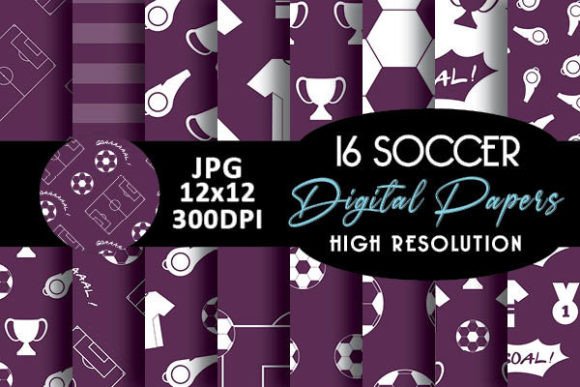
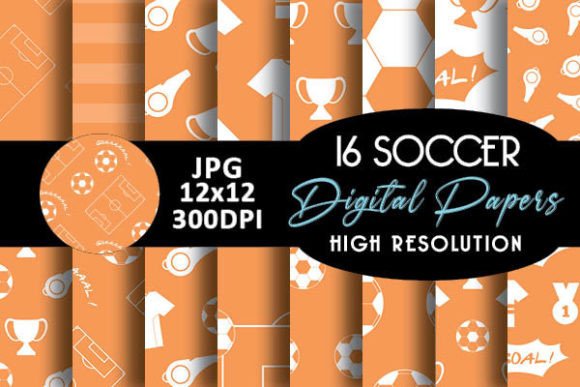
Orange Soccer Digital Papers Patterns refers to a curated set of 16 high-resolution digital paper backgrounds featuring soccer-themed designs—stripes, balls, cleats, goals, and abstract field motifs—all rendered in warm, vibrant orange tones. Unlike generic sports-themed graphics or monochrome templates, this collection emphasizes cohesive color harmony, intentional pattern density, and print-ready resolution (300 DPI). Each background is delivered as a downloadable PNG or JPEG file, optimized for immediate use across design platforms like Canva, Adobe Photoshop, Cricut Design Space, or even Microsoft Word.
What Sets Orange Soccer Digital Papers Patterns Apart
The distinction lies not just in subject matter but in execution. Many digital paper packs prioritize quantity over consistency—offering mismatched colors, inconsistent scaling, or low-contrast patterns that fade when printed. Orange Soccer Digital Papers Patterns avoids those pitfalls by maintaining uniform saturation, balanced negative space, and deliberate repetition intervals. For example, one pattern might layer subtle hexagonal stitching over a gradient orange field; another uses stylized ball silhouettes arranged in a diagonal rhythm—not random, not overwhelming, but visually supportive.
This attention to detail makes the set especially effective for projects where background texture must recede slightly while still reinforcing theme and tone. It’s why users report strong performance in layered invitations: text remains legible without heavy drop shadows, and printed versions retain clarity on matte cardstock.
How It Compares With Broader Digital Paper Categories
Digital papers fall into several functional categories: themed collections (e.g., “football,” “back-to-school”), stylistic families (vintage, watercolor, geometric), and utility-based sets (lined, grid, dot-grid). Orange Soccer Digital Papers Patterns sits at the intersection of theme and style—but leans more toward purposeful application than decorative excess.
Compared to general-purpose sports digital papers, it offers tighter visual focus. A broader “sports” pack may include baseball bats, basketballs, and hockey sticks in varying palettes—useful for variety, but less effective if your project centers specifically on soccer culture or orange branding (e.g., team colors, school spirit days, tournament promotions). In contrast, Orange Soccer Digital Papers Patterns delivers thematic continuity without sacrificing design sophistication.
When weighed against hand-drawn or scanned texture papers, it trades tactile authenticity for scalability and consistency. You won’t get the grain of real paper or ink bleed—but you gain pixel-perfect alignment, seamless tiling, and effortless resizing. That tradeoff favors digital-first workflows: e-invites, social media banners, printable party kits, or classroom posters where reproducibility matters more than analog nuance.
Strengths in Real-World Use Cases
- Birthday parties: Backgrounds work well for cupcake toppers, photo booth props, and favor tags—especially when paired with coordinating clipart (which this set often includes).
- Scrapbooking: The orange palette complements common team colors (like UC Irvine, Syracuse, or Dutch national accents) and photographs with warm lighting, reducing the need for heavy color correction.
- Invitations and announcements: Because all 16 papers share tonal range and contrast levels, switching between them mid-project—say, using one for the front cover and another for the RSVP card—feels intentional rather than disjointed.
- Educational crafts: Teachers use these for bulletin board borders or reading log trackers where visual interest supports engagement without distraction.
Tradeoffs and Limitations to Consider
No digital paper set serves every need—and Orange Soccer Digital Papers Patterns is no exception. Its focused scope means limited flexibility outside soccer-related contexts. If your project requires neutral tones, seasonal motifs (e.g., snowflakes or pumpkins), or multi-sport inclusivity, this set won’t substitute for a broader library.
Also, while the 16 papers provide meaningful variety—ranging from bold graphic repeats to soft tonal gradients—they don’t include editable vector files (like SVGs) or layered PSDs. That limits customization for advanced users who want to isolate elements, adjust individual shapes, or recolor components non-destructively. For those needs, a vector-based resource may be more appropriate—even if it demands steeper learning curves or higher cost.
Another practical consideration: licensing. Most reputable digital paper sellers grant personal and small-business commercial use, but always verify terms before applying designs to resale items like physical party kits or digital planners. Orange Soccer Digital Papers Patterns typically permits both, but usage rights can vary by vendor—so checking the license details remains essential.
When This Set Fits Best—And When It Might Not
Orange Soccer Digital Papers Patterns is most valuable when your project has clear boundaries: a defined audience (e.g., youth soccer league families), a consistent visual goal (e.g., energetic yet organized), and a need for quick implementation. Think of it as a precision tool—not a Swiss Army knife.
It shines in time-sensitive scenarios: planning a weekend birthday party, preparing end-of-season awards, or designing a school club newsletter with a tight deadline. The unified palette reduces decision fatigue; the ready-to-use format skips setup steps like color matching or pattern scaling.
Conversely, it may fall short if your work demands extreme adaptability. For instance, a freelance designer building multiple client brands—some preferring minimalist black-and-white, others leaning into neon gradients—would likely supplement this set with more versatile or modular resources. Similarly, illustrators developing original characters or complex scenes may find the patterns too static for dynamic composition, preferring customizable brushes or procedural textures instead.
Practical Comparison Example
Imagine creating a “Soccer Star Award” certificate for a local rec league. With Orange Soccer Digital Papers Patterns, you could choose a subtle ball-dot background for the main body, then switch to a bold striped variant for the header bar—keeping cohesion through shared hue and scale. Contrast that with pulling individual soccer icons from a generic clipart site: you’d spend time adjusting size, spacing, and color balance manually, risking inconsistency across versions. Or compare it to using a free online pattern generator: while flexible, those tools rarely offer soccer-specific motifs at print resolution without watermarking or export limits.
Making an Informed Choice
Before selecting Orange Soccer Digital Papers Patterns—or any themed digital paper set—consider three questions:
- What’s the primary medium? If output is mostly digital (email invites, Zoom backgrounds), resolution and file type matter less than visual impact. For physical printing, check DPI, color mode (CMYK vs RGB), and whether the seller provides test prints or color guides.
- How much design control do you need? If you’re comfortable editing layers, vectors, or masks, look for packages offering source files. If you prefer drag-and-drop simplicity, focus on usability and preview accuracy.
- Does the theme align with audience expectations? Orange evokes energy and visibility—but may clash with certain branding (e.g., navy-heavy teams or eco-focused initiatives). Ensure the tone matches your message, not just the sport.
Orange Soccer Digital Papers Patterns meets a specific, recurring need: reliable, attractive, soccer-centered backgrounds that support—not compete with—your content. It doesn’t replace foundational design skills or broader asset libraries. But for targeted, efficient execution within its niche, it delivers measurable value—without overpromising or overcomplicating.