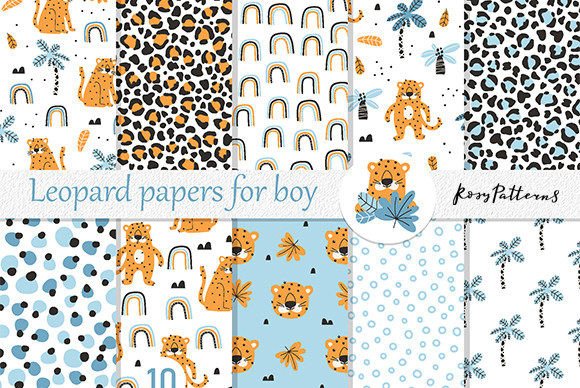
Funny Leopard Seamless Boys Patterns
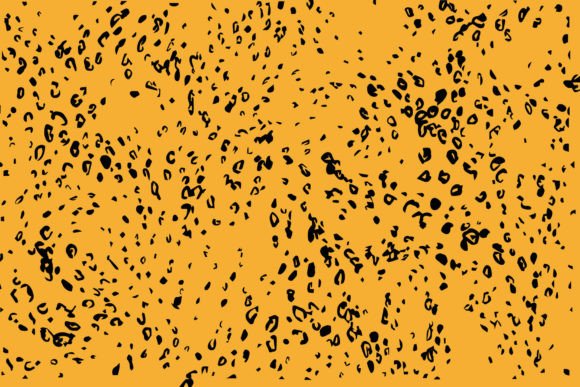
When you're designing for children—whether it's birthday invitations, classroom materials, fabric for custom clothing, or digital banners for a small business—the right pattern sets the tone before a single word is read. Funny Leopard Seamless Boys Patterns isn’t just another clipart pack—it’s a precision-crafted toolkit built for real-world implementation across physical and digital workflows. It delivers 10 high-resolution JPEG files (12×12 inches at 300 dpi), each engineered to tile infinitely in both directions without visible seams. That technical detail matters—not as a feature to admire, but as a functional advantage that eliminates manual patching, reduces revision time, and ensures consistency across large-format outputs.
Where This Pack Fits Into Your Creative Workflow
This collection enters your process where scalability and repetition intersect with child-friendly energy. Unlike static illustrations or one-off graphics, seamless patterns are inherently modular—they’re designed to be repeated, scaled, cropped, layered, and adapted. You don’t “use” them once and move on; you embed them into templates, apply them as background fills in design software, or print them across yardage for sewing projects. That means Funny Leopard Seamless Boys Patterns functions most effectively when integrated early—before finalizing layout grids, selecting paper stocks, or committing to print runs. It becomes part of your asset library, not a last-minute decoration.
Before the Project: Preparation and Planning
Start by auditing your upcoming needs: Are you preparing a series of themed birthday invites? Designing reusable classroom posters? Developing a line of gender-neutral kids’ apparel? Knowing the scope helps determine how many patterns you’ll need—and how they’ll interact with typography, photos, or other graphic elements. Because all 10 files are seamless and uniform in resolution and color profile, you can preview combinations in advance using mockup tools (like Adobe XD, Canva, or even PowerPoint) without worrying about mismatched scales or alignment breaks. This saves hours later—especially when printing fabric or large banners where tiling errors become costly.
During the Project: Integration and Consistency
Drop any of the JPEGs directly into design applications like Illustrator (as linked assets), Photoshop (as smart objects), or Affinity Designer (as pixel-perfect backgrounds). Since they’re 300 dpi and 12×12 inches, they scale cleanly up to poster size—or down to label dimensions—without pixelation. For fabric designers, this means you can import one pattern into Spoonflower’s uploader and instantly generate swatches, yardage previews, or repeat tile maps. For educators creating printable worksheets, layer the leopard motif subtly behind text boxes using low-opacity blending modes—keeping readability intact while adding visual cohesion across an entire unit plan.
Compatibility is straightforward: JPEG format ensures universal support across platforms—from desktop publishing suites to web builders like Webflow or Shopify. No plugins, no conversions, no version conflicts. If you’re collaborating with printers, share the original files alongside your CMYK-converted PDFs; their RIP software will handle the tiling automatically. No need to pre-stitch tiles manually in Photoshop—a common bottleneck with non-seamless assets.
After the Project: Reuse, Repurpose, and Archive
Once a project ships, these patterns don’t retire—they migrate. Save them in a clearly labeled folder (“Patterns > Kids > Seamless > Leopard”) within your master asset library. Tag them in Lightroom or Adobe Bridge with keywords like “boys,” “playful,” “scalable,” and “seamless”—so next time you’re building a baby shower announcement or updating a nursery website, they surface fast. Because the files are lightweight (JPEG) and standardized, they integrate smoothly into DAM systems or cloud-based team drives—even for remote collaborators who may not use professional design tools.
Practical Implementation Tips for Real Workflows
- For scrapbookers and card makers: Print patterns on heavyweight cardstock, then die-cut shapes (like speech bubbles or animal silhouettes) to layer over solid-color bases. The seamless nature means you won’t see edge lines when cutting near pattern boundaries.
- For small business owners: Use one pattern as a consistent background across email headers, social media cover images, and product packaging inserts. This builds subtle brand recognition without relying on logos alone.
- For educators: Convert a pattern into a printable PDF grid (e.g., 8.5×11 inches with 0.25-inch margins), then overlay editable text fields in Acrobat. Students can write directly on the leopard-themed worksheet—no design overhead per class session.
- For web designers: Apply patterns via CSS background-image with
repeatenabled. They’ll scale responsively across devices without loading multiple image sizes—ideal for hero sections or section dividers on kid-focused sites.
Quality Control and Long-Term Usability
Each file in the Funny Leopard Seamless Boys Patterns pack was tested for true seamlessness—not just visually, but functionally. That means no accidental offsets, no color shifts at tile edges, and no compression artifacts that blur detail at 300 dpi. When printed on matte photo paper or cotton fabric, the leopards retain crisp outlines and balanced contrast. There’s no hidden watermark, no licensing restrictions on commercial use, and no requirement to credit the source—so you maintain full creative control and client confidentiality.
Organizationally, treat these files like raw materials—not finished designs. Store them separately from final deliverables. Name them descriptively: “leopard-fun-01.jpg”, “leopard-fun-02.jpg”, etc., rather than generic “pattern1.jpg”. This avoids confusion during batch exports or when sharing subsets with team members. And because they’re JPEGs—not PSDs or AI files—you won’t face compatibility issues if your workflow shifts between Mac and Windows, or if you onboard a new designer unfamiliar with your usual tools.
How It Interacts With Other Tools and Decisions
This pack doesn’t replace illustration, typography, or photography—it supports them. Pair it with Google Fonts like Quicksand or Nunito for friendly, legible headlines. Combine it with neutral-toned stock photos of diverse children to avoid visual competition. Use it alongside SVG icons (not rasterized PNGs) so your interface remains sharp at any zoom level. In budget planning, factor in how much time it saves: if one seamless pattern cuts 45 minutes off a banner design task, and you produce six banners per quarter, that’s nearly five hours reclaimed annually—time better spent refining messaging or testing layouts.
It also informs procurement decisions. Need matching envelopes for leopard-printed invites? Order them in kraft or white—no need to hunt for pre-printed options. Want to sew matching hair clips or backpack patches? Print the pattern on iron-on transfer paper, then cut and apply. The flexibility removes dependency on third-party vendors for every variation, giving you tighter quality control and faster turnaround.
In short, Funny Leopard Seamless Boys Patterns works best when treated not as decoration—but as infrastructure. It’s the quiet layer beneath stronger decisions: smarter templates, more consistent branding, faster iterations, and fewer production surprises. Whether you're launching a new Etsy shop, prepping for back-to-school crafts, or redesigning a pediatric clinic’s patient handouts, these patterns serve a practical role—not just aesthetic appeal. They scale with your ambition, adapt to your tools, and stay usable long after trends shift. That’s not novelty. That’s workflow resilience.