Watercolor Autumn Patterns PNG & JPG
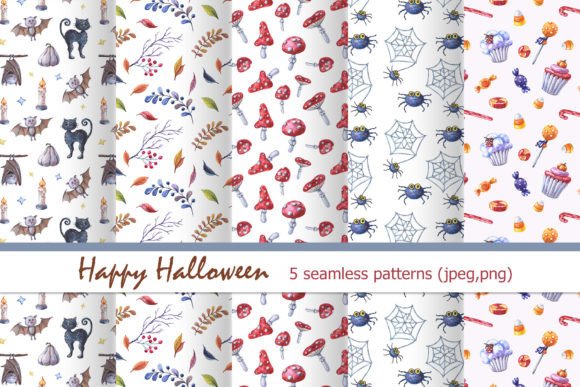
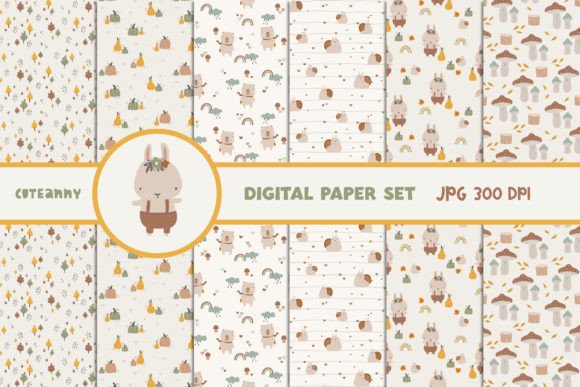
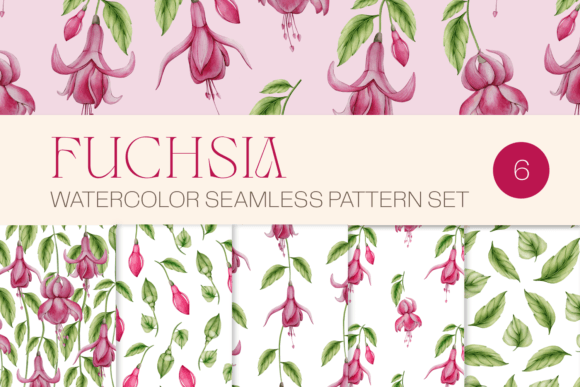
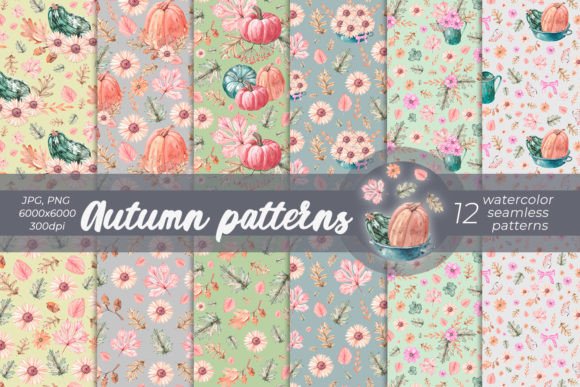
There’s something quietly powerful about watercolor autumn patterns—soft edges, organic texture, and that unmistakable warmth of the season rendered in pigment and paper. These aren’t generic clipart leaves or flat vector icons. They’re hand-drawn pumpkins, acorns, maple leaves, and swirling vines—all captured in rich, layered watercolor washes, then digitized into seamless, high-resolution patterns. The result? A versatile, tactile, and deeply seasonal design resource that feels handmade but performs flawlessly across digital and print workflows.
What Makes This Collection Stand Out
At its core, this Watercolor Autumn Patterns PNG, JPG set is built for real-world use—not just decoration. Each of the 12 seamless patterns is delivered in two essential formats: high-resolution JPEG (6000×6000 px, ideal for printing) and transparent-background PNG (same resolution, perfect for layering in digital projects). That dual-format approach means no guesswork: you get what you need, when you need it.
The hand-drawn elements—pumpkins with subtle brushstroke ridges, acorns with delicate cap textures, leaves showing natural vein variation—are scanned and color-balanced to preserve authenticity without sacrificing consistency. No harsh edges, no pixelated halos, no repetitive tiling artifacts. Just clean, scalable, repeatable patterns that breathe like real watercolor—but behave like professional design assets.
Creative Applications That Go Beyond “Fall Decor”
This isn’t just for pumpkin spice latte labels or Thanksgiving table runners. Designers and makers are using these patterns in ways that reflect actual workflow needs:
- Packaging for small-batch goods: A local candle maker applied the “Maple & Acorn” pattern to kraft box wraps—printed on uncoated stock—to reinforce artisanal credibility while keeping production simple and cost-effective.
- Digital stationery systems: Educators and coaches create cohesive course kits—PDF workbooks, printable planners, email headers—all unified by one watercolor pattern. The transparency of the PNGs allows easy overlay on soft background colors without losing detail.
- Fashion textiles with intention: A sustainable apparel brand used the “Pumpkin Vine” pattern as a lining motif for reversible jackets. Because the pattern repeats seamlessly at 6000×6000 px, it scaled cleanly from pocket linings to full garment prints—no distortion, no visible seams.
- Invitations with quiet sophistication: Wedding designers avoid overused gold-foil trends by layering a muted “Autumn Leaf Wash” pattern behind minimalist typography. The watercolor texture adds depth without competing—ideal for intimate harvest-themed celebrations.
How Different Users Adapt the Set
Your goals shape how you use these patterns—and that flexibility is intentional.
Freelancers and small studios treat the collection like a modular toolkit: they mix one pattern for background texture, another as a border element, and pull individual motifs (using the PNGs) for custom icons or social media graphics. Because all files are high-res and seamless, resizing for Instagram carousels, Etsy banners, or client pitch decks requires zero reworking.
Bloggers and content creators use the patterns to build visual continuity across platforms—same leaf motif appears subtly in blog headers, Pinterest pins, and downloadable lead magnets. It reinforces brand identity without demanding custom illustration time.
Hobbyists and educators appreciate how easily these translate into hands-on projects: printing on fabric for quilting blocks, cutting vinyl decals for mason jar labels, or importing into Canva or Affinity Designer for classroom posters. The transparency of the PNGs makes them beginner-friendly—even if you’re new to digital design, you can drag, drop, and adjust opacity without learning complex masking techniques.
Practical Tips for Stronger Results
Getting great outcomes isn’t about complexity—it’s about thoughtful application:
- Start with your surface: If printing on textured paper or fabric, lean into the watercolor’s softness—don’t pair it with ultra-sharp vectors or neon type. Let the pattern be the texture; keep supporting elements clean and grounded.
- Control contrast intentionally: These patterns have natural tonal range. For dark backgrounds, use lighter variants (like “Washed Maple”) or reduce opacity. For light substrates, try the deeper “Pumpkin & Stem” version at full strength.
- Test scale early: Seamless doesn’t mean invisible. Print a 4×4 inch swatch before committing to yardage or packaging. You’ll quickly see how the pattern reads at intended size—and whether motifs feel balanced or overly dense.
- Keep branding consistent: If you’re using multiple patterns across a product line, assign each one a purpose—e.g., “Acorn Cluster” for packaging, “Leaf Vein Wash” for digital assets. That builds recognition without repetition fatigue.
Ideas That Spark Real Projects
You don’t need a big budget or studio setup to begin. Here are realistic, low-barrier starting points:
- Create a set of four matching greeting cards—each featuring a different pattern as a subtle background, paired with a single hand-lettered phrase (“Gather,” “Warmth,” “Harvest,” “Gratitude”). Print locally or use a print-on-demand service.
- Design a printable autumn planner: use one pattern for weekly spreads, another for habit trackers, and extract individual pumpkins/acorns as bullet points or section dividers.
- Develop a mini-brand kit for a seasonal pop-up—logo, social banner, menu board, and takeout bag—all anchored by one dominant pattern. Consistency builds trust, even for short-term ventures.
- Turn the PNGs into embroidery motifs: import into stitch software, simplify outlines, and embroider onto linen napkins or tote bags. The watercolor texture translates beautifully into thread gradients.
What matters most isn’t how many patterns you use—but how thoughtfully you let them serve your message, your audience, and your medium. These Watercolor Autumn Patterns PNG, JPG files are tools, not shortcuts. They give you texture, tone, and tradition—ready to adapt, layer, scale, and speak clearly—whether you’re launching a business, teaching a class, or simply making something meaningful for someone you care about.